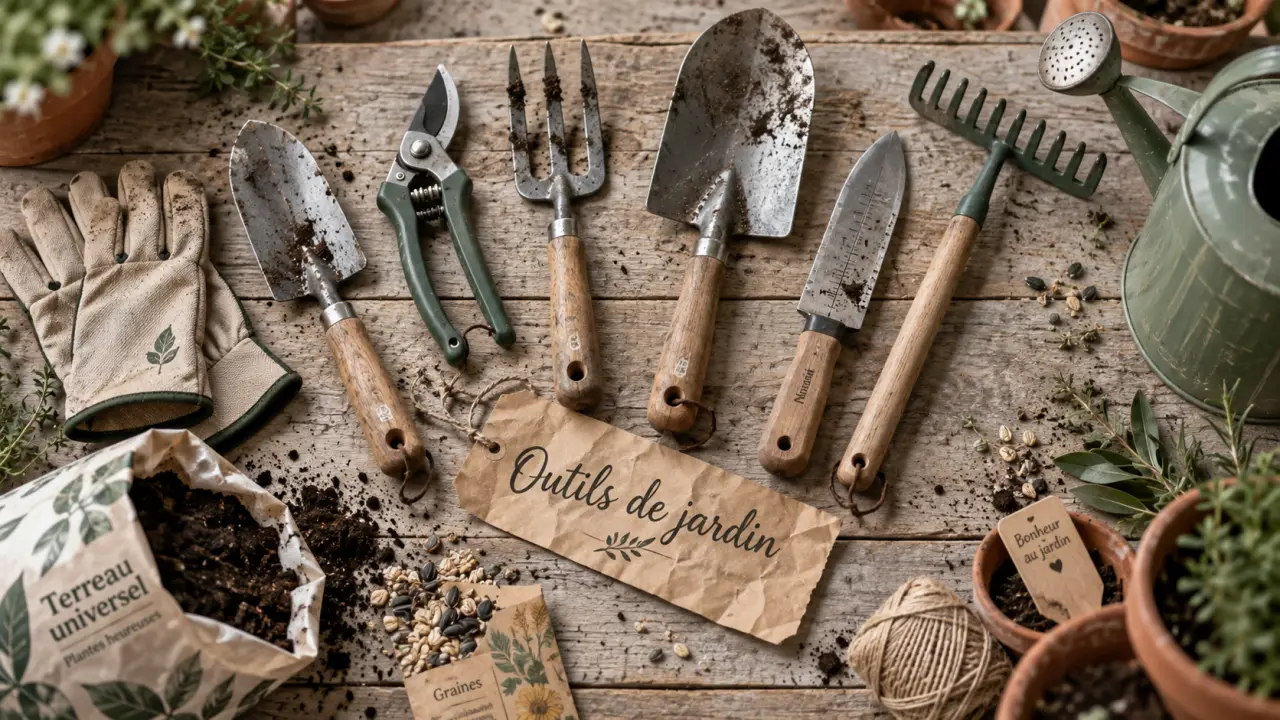
A good garden does not require a shed full of equipment. For most beginners, a small set of reliable gardening essentials covers planting, pruning, weeding, watering, and routine cleanup. Start with tools suited to the work you actually do, then add specialist equipment when a repeated task makes it worthwhile.
The 8 tools worth buying first
Build your kit around versatility. These eight tools suit vegetable beds, flower borders, containers, and small home gardens. They are also relatively easy to store and maintain.
- Well-fitting gloves: Choose a durable, water-resistant pair with enough breathability for regular work. Gloves protect against thorns, splinters, damp soil, and blisters without making it difficult to handle seeds or stems.
- Hand trowel: This is the everyday tool for planting bulbs, transplanting seedlings, filling containers, and lifting small weeds.
- Bypass pruners: Use them to deadhead flowers and cut live stems or green wood cleanly.
- Garden fork: A fork loosens dense soil and moves compost or mulch without requiring the same lifting action as a full spade.
- Spade: A spade is useful for digging planting holes, cutting bed edges, lifting sod, and shifting soil.
- Hori hori or soil knife: This multipurpose blade can dig, slice roots, divide plants, measure planting depth, and remove weeds.
- Rake: Use a rake to gather leaves, clippings, and other garden debris.
- Watering can or hose with an adjustable nozzle: Choose between them according to the size and layout of your growing space.
Hold a tool before buying it if possible. A handle that feels too wide, a trowel that flexes under light pressure, or a locking mechanism that you cannot operate comfortably will quickly become frustrating. A few well-made tools are generally more useful than a large matching set of mediocre ones.
Match cutting tools to the plant material
Pruning tools are not interchangeable. The wrong blade can crush stems, strain your hand, or make a simple maintenance job unnecessarily difficult. Choose the tool according to the type of plant material you need to cut.
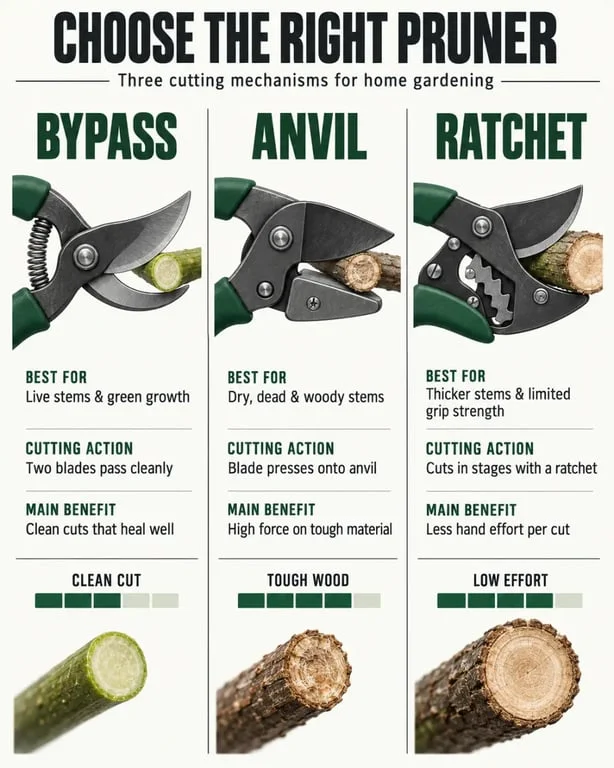
Bypass, anvil, and ratchet pruners
| Tool type | Best use | Why it works |
|---|---|---|
| Bypass pruners | Live stems and green wood | A curved blade passes a lower hook, creating a slicing cut. |
| Anvil pruners | Dead or brittle material | A sharp blade closes onto a flat surface and handles dry growth well. |
| Ratchet pruners | Thicker stems and reduced hand strength | The mechanism multiplies cutting force, so each squeeze requires less effort. |
Keep bypass pruners sharp and clean. A sharp blade makes a cleaner cut and reduces injury to the plant. Wipe away sap and soil after use, dry the tool, and apply a light coat of oil to moving parts when they begin to feel stiff.
When loppers become necessary
Loppers are useful when branches are too thick or too far inside a shrub for hand pruners. Their handles generally range from 16 to 36 inches, providing extra leverage and reach. Longer handles make cutting easier, but they also add weight. Choose the shortest length that safely reaches the branch. For larger woody branches, a pruning saw gives you more control than forcing pruners or loppers beyond their capacity.
Dig, plant, and weed with less effort
Let the condition of your soil guide your purchase. A trowel is enough for potting mix and prepared beds, while compacted, clay-heavy, or rocky ground calls for stronger tools and a slower approach.
Use the fork and spade for different jobs
A garden fork breaks up dense soil with less slicing action than a spade. It is particularly useful when turning compost into a bed or lifting mulch. A spade creates neat holes, straight edges, and clean cuts through turf. If your garden consists mostly of containers or raised beds, you may use a hand trowel far more often than either full-size tool.
Choose a weeder that removes the root
For young, surface-rooted weeds, a scuffle or stirrup hoe works with a push-and-pull action just below the soil surface. It is efficient when used regularly on dry soil. Deep tap-rooted weeds need a narrow tool that reaches beside the root. A hori hori knife or dedicated taproot weeder is more effective than repeatedly cutting off the visible leaves.
Think of weeding as managing a tide rather than winning one final battle. New seedlings arrive in waves after rain, soil disturbance, or a warm spell. A quick pass with a hoe while weeds are still small prevents their roots from gaining ground. A ten-minute inspection of bed edges and container rims can catch the next wave before it spreads seed. This routine reduces the need for exhausting, occasional clear-outs.
Water and carry materials without making work harder
Watering equipment should suit the distance, access, and plants in your garden. A watering can gives precise control for seedlings, indoor plants, and containers. One gallon of water weighs just over eight pounds, so a smaller can refilled more often may be more comfortable than a large, full one.
For beds and borders, choose a hose that reaches without excessive extra length. Hoses are commonly available in 1/2-inch, 5/8-inch, and 3/4-inch diameters, with approximate flow rates of 9, 15, and up to 25 gallons per minute, respectively. An adjustable nozzle lets you switch from a gentle shower to a stronger stream. A watering wand, available in lengths from 10 to 48 inches, makes it easier to reach hanging baskets and the back of deep borders without trampling plants.
A garden trug, sturdy bucket, or wheelbarrow becomes useful once you regularly move compost, mulch, prunings, or harvests. For a small patio garden, a trug is usually easier to store and carry than a wheelbarrow.
Buy for comfort and care for durability
Ergonomics matter when you garden regularly. Look for secure grips, a tool weight you can control, and handles that fit your hand. Gardeners with arthritis or limited grip strength may benefit from ratchet pruners, lightweight tools, a garden kneeler and seat, or a stand-up weeder that avoids repeated bending. Take breaks before your hands or back begin to ache. Fatigue reduces control around sharp blades.
After each session, remove soil, rinse tools if needed, and dry them thoroughly before storage. Sharpen cutting edges regularly and keep tools in a dry shed, garage, or storage box. For wooden handles, clean and dry the surface, sand rough areas, and treat the wood with linseed oil when appropriate. Prioritize tools with replaceable parts where possible. A new spring, blade, or handle can extend the life of a tool that already fits you well.
{“@type”:”Article”,”@context”:”https://schema.org”,”headline”:”Build Your Gardening Essentials Kit Around These 8 Core Tools”,”inLanguage”:”en-US”,”description”:”A good garden does not require a shed full of equipment. For most beginners, a small set of reliable gardening essentials covers planting, pruning, weeding, watering, and routine…”}
Related guides to continue
To build a stronger understanding of this topic, continue with these related guides from the same site. They cover nearby decisions, maintenance points and practical details that often influence the final result.