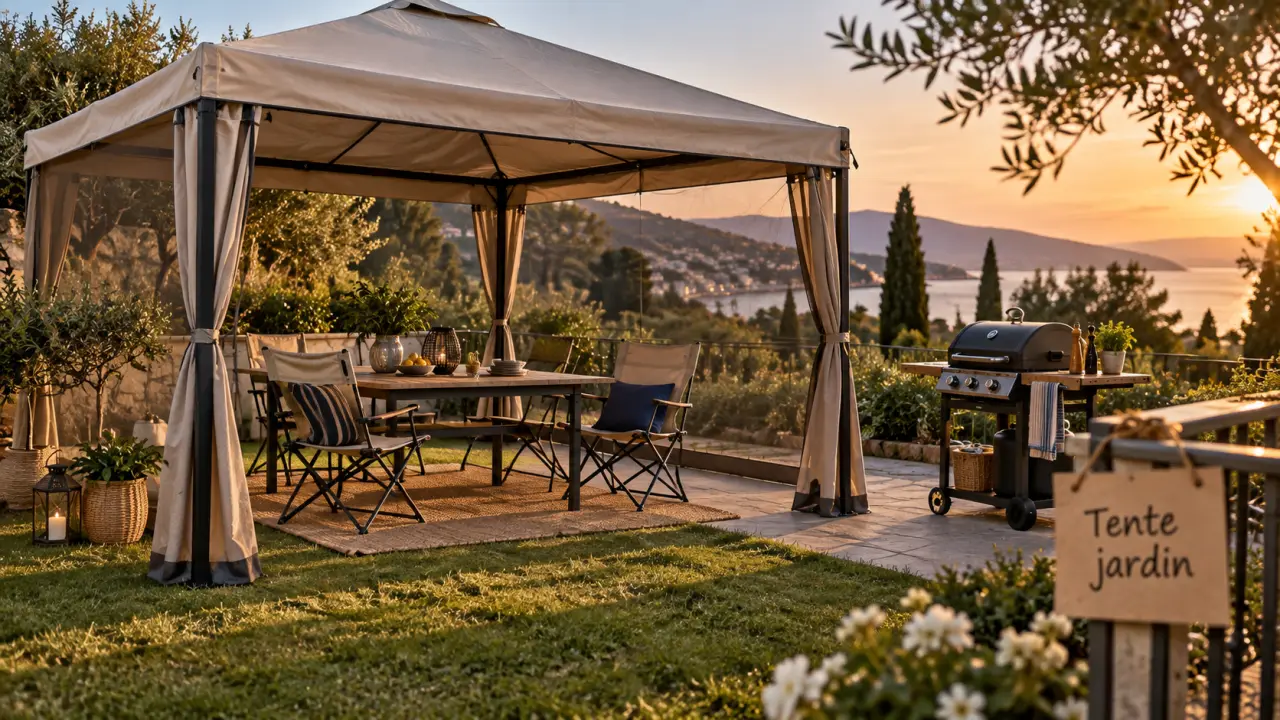
A backyard tent can turn a patio, lawn, or driveway into useful outdoor space for a barbecue, birthday, pool day, or family gathering. The best choice is not necessarily the largest model you can fit. It should match your available ground area, the people or items underneath, and the level of weather protection you actually need.
Start with the shelter style that suits your backyard
The term “backyard tent” covers several products with different purposes. A compact pop-up canopy provides quick shade for occasional use, while a party tent offers more enclosed coverage for guests. Larger frame shelters are better suited to vehicles, equipment, or events that take place regularly.
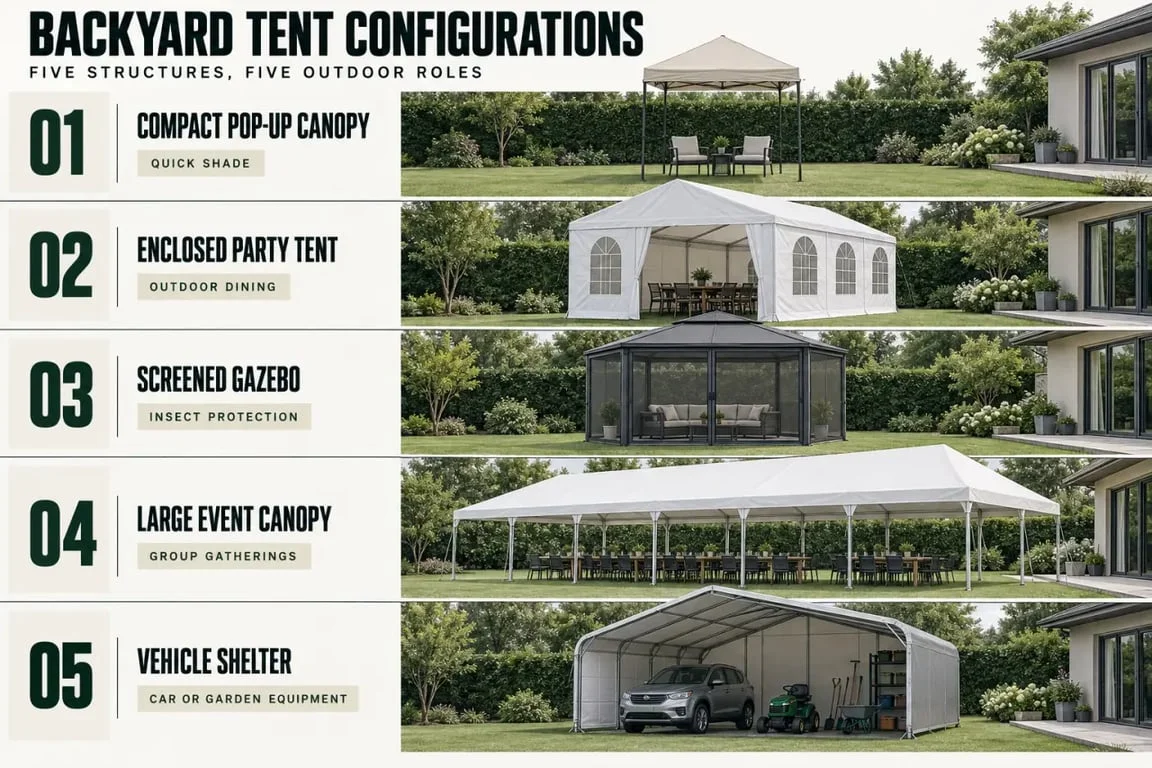
| Tent type | Best for | What to look for |
|---|---|---|
| Pop-up canopy | Patio meals, tailgates, small barbecues | Carry bag, quick-opening frame, open sides |
| Garden or party tent | Birthdays, dining tables, garden parties | Waterproof cover, removable sidewalls, doors |
| Screened gazebo | Poolside seating and summer evenings | Mesh screens, good headroom, zippered entry |
| Large event canopy | Weddings, markets, large gatherings | Steel frame, modular sidewalls, generous clearance |
| Vehicle shelter | Cars, motorcycles, mowers, outdoor equipment | Wide access, roll-up doors, sturdy frame |
For a one-off lunch, portability may matter more than a heavy frame. If the shelter will stay up repeatedly during a season, look for a steel or galvanized steel structure and a cover designed for outdoor exposure. A powder-coated finish can also help limit corrosion on suitable models.
Choose the footprint before comparing features
Measure the clear, level area where the tent will stand, rather than looking only at the overall size of your yard. Leave space around the legs for access and anchoring, and keep the roof away from trees, fences, grills, and pool edges. Consider the route from the house too. A large canopy is less practical if guests have to squeeze around its corners.
Match the size to the activity
A 10 ft x 10 ft canopy works well as a compact shade zone for a few chairs or a serving station. A 10 ft x 20 ft or 10 ft x 30 ft format gives a long dining layout more room. For larger parties, listed options extend to 20 ft x 40 ft, while some large canopy ranges reach 30 ft x 50 ft. These bigger shelters need a carefully planned location and a realistic setup team.
- For a barbecue, reserve space for seating and food service, but keep the grill outside the covered area.
- For a dining setup, allow room for chairs to be pulled back and for people to walk around the table.
- For a vehicle, measure the full length, the width with mirrors, and the clearance needed to open the doors.
- For storage, plan access to lawn equipment instead of filling every square foot.
Do not buy based on roof dimensions alone. The usable area becomes smaller when tables, coolers, sidewalls, and people occupy the perimeter.
Compare weather protection, enclosure, and airflow
A waterproof cover helps keep a gathering dry during rain, but it does not make a lightweight tent suitable for severe weather. Some garden tents and selected canopy covers are described as 100% waterproof. Check whether that claim applies only to the roof or to the complete setup, including seams, doors, and sidewalls.
Sidewalls are useful, but not always desirable
Removable sidewalls make a party tent more adaptable. Add one on the windward side, close several sides during light rain, or remove them when you want a more open garden setting. Closing every side, however, can make the interior feel warm and still. Screens are often a better option for summer meals because they help reduce insects while allowing air to circulate.
Enclosure does not have to be an all-or-nothing choice. An open side facing the breeze can help cooler air move across seated guests, while a solid wall on the opposite side can block gusts and low sun. This arrangement can improve comfort more effectively than closing the whole tent, especially when hot dishes, people, and dark patio surfaces add heat beneath the canopy.
UV performance also varies by cover. Certain ShelterLogic canopies are stated to block 98% of harmful UV rays, but you should check that claim on the specific model you are considering. Shade remains useful even when the sky is bright but not completely clear.
Inspect the frame and setup plan before you buy
The cover gets much of the attention, but the frame determines how practical the tent is to use. Steel frames are common, while galvanized steel is often selected for added corrosion resistance. Inspect the connection points and leg design. Check whether replacement parts are available and whether the roof can be tensioned evenly without forcing the fabric.
Portable does not mean maintenance-free
Quick-assembly tents and carry bags are convenient for occasional use, camping, or moving shade around the yard. After use, remove leaves and dirt, let the cover dry completely, and store it in a dry place for winter. Packing a damp cover can encourage odors and mildew, even when the fabric includes antifungal treatment.
- Set up on level ground and inspect the frame before adding the cover.
- Use the anchoring method specified for your tent and surface.
- Do not leave a temporary canopy unattended when strong wind or storms are expected.
- Lower or remove sidewalls if they catch the wind, following the manufacturer’s instructions.
Set a budget around durability, not just the sale price
Backyard tent prices vary widely according to footprint, frame weight, fabric, and enclosure pieces. In the listed examples, smaller options range from about $95.90 to $199.00, while larger event canopies cost several hundred dollars and can exceed $1,000. A low initial price can make sense for rare, fair-weather use. For regular hosting or equipment protection, a stronger frame and better cover may be more economical over time.
Before ordering, compare the exact package contents. Sidewalls, screens, doors, stakes, a carry bag, and extension sections are not always included. Read customer ratings alongside the review count, then focus on comments about setup, fabric fit, missing parts, and performance after repeated use. Those details often tell you more than a product photo about whether the tent will work in your backyard.
{“@type”:”Article”,”@context”:”https://schema.org”,”headline”:”A Backyard Tent Adds Shade Without Trapping Heat Inside”,”inLanguage”:”en-US”,”description”:”A backyard tent can turn a patio, lawn, or driveway into useful outdoor space for a barbecue, birthday, pool day, or family gathering. The best choice is not necessarily the…”}
Related guides to continue
To build a stronger understanding of this topic, continue with these related guides from the same site. They cover nearby decisions, maintenance points and practical details that often influence the final result.