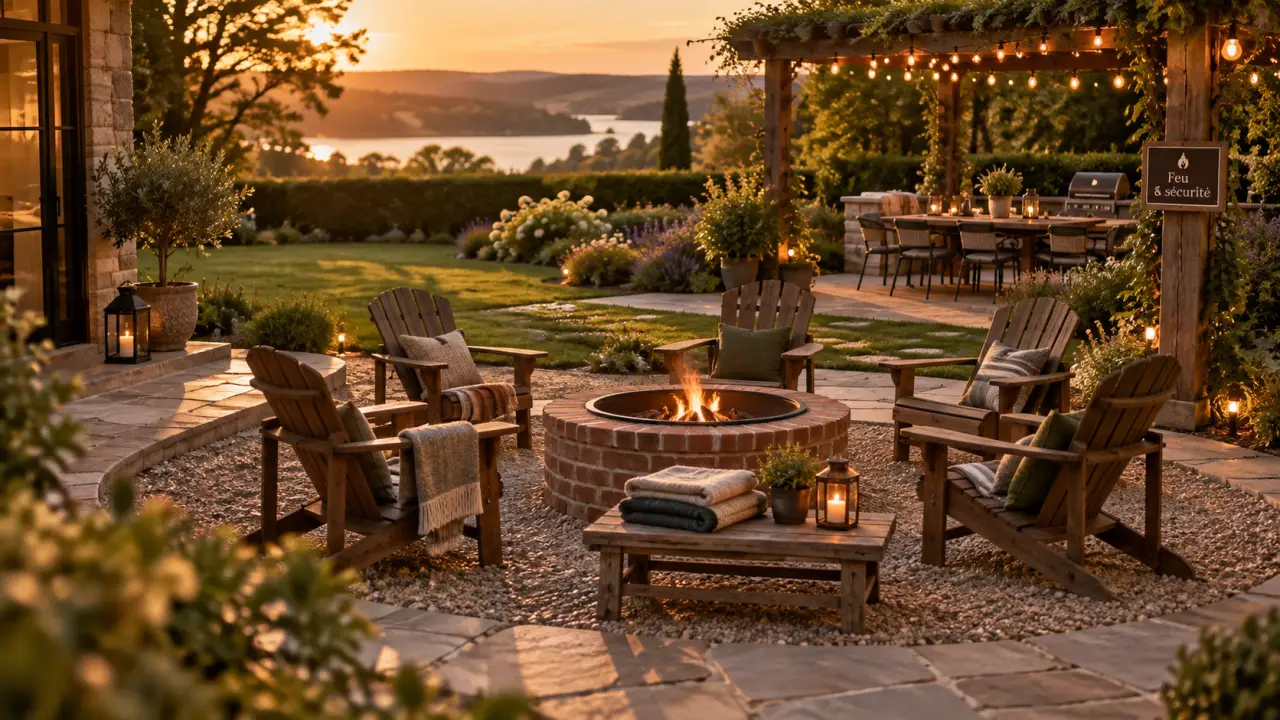
A backyard fire pit can turn an unused corner into a comfortable place to gather after dinner. The result depends on more than the bowl or ring of blocks. The surface, seating, circulation, fuel, drainage, and safety all shape how practical the space feels.
Start with a layout that invites people to stay
Think of the fire pit as the center of an outdoor room. A circular arrangement encourages conversation, while a square or rectangular layout suits a modern patio and can align with a deck, dining area, or outdoor kitchen. In a smaller yard, placing the fire feature at the edge of a patio preserves more open lawn.
Make room for seats and a clear walking path
The fire pit is only part of the footprint. Chairs need space to move back, and guests need a route around them without crossing through the seating circle. One documented DIY layout uses a 15-foot-diameter circle for six Adirondack chairs, with additional room around the group. Use this as a reference for a generous gathering area, then adjust the dimensions to your furniture and local clearance requirements.
Leave a deliberate opening in the chair circle toward the home or patio. This clear arrival line makes it easier to carry drinks, supervise children, and move safely after dark. It also gives the area a more organized feel than furniture scattered around a central feature.
Choose a surface that defines the zone
Gravel, flagstone, concrete, brick pavers, and decomposed granite can all create a durable fire pit patio. Gravel suits a casual circular area because it drains well and separates the seating zone from the lawn. Pavers and concrete provide a firmer surface for chairs, side tables, and mobility aids.
Whatever material you choose, treat the surface as part of the structure, not just decoration. It should remain stable and level, offer suitable drainage, and comply with the fire pit manufacturer’s instructions.
Match the fire pit type to the way you use your backyard
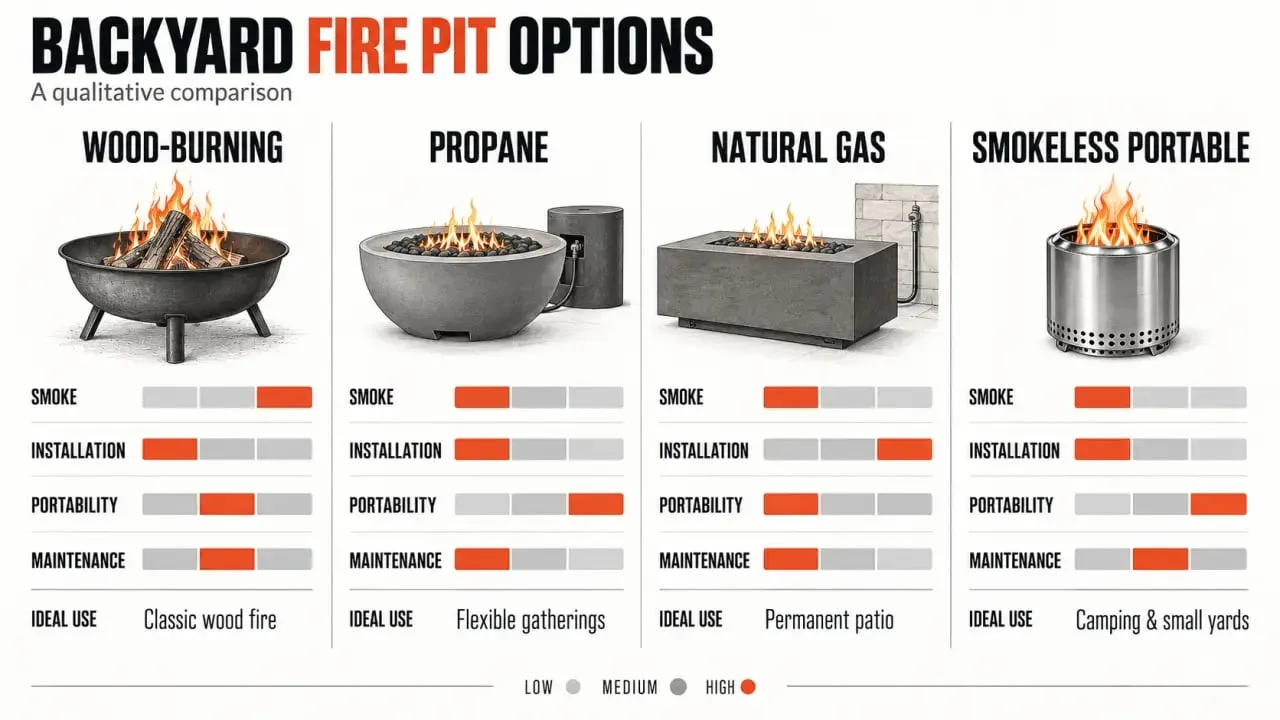
The best fuel depends on your daily habits. Wood creates the familiar campfire experience, while propane and natural gas offer faster lighting and simpler shutdown. Portable units work well for renters or occasional hosts. Built-in features make more sense when the layout is permanent.
| Option | Best for | Main advantage | Consider before choosing |
|---|---|---|---|
| Wood-burning fire pit | Campfire atmosphere and s’mores | Crackle, aroma, and a traditional flame | Smoke, ash, wood storage, and local restrictions |
| Propane fire pit or fire table | Easy evenings and flexible placement | Quick ignition and adjustable flame | Propane cylinder storage and hose management |
| Natural-gas feature | Frequent use in a permanent patio | No cylinder changes | Professional gas-line installation is usually needed |
| Smokeless portable pit | Backyards with close neighbors | Designed to reduce smoke compared with a basic wood pit | It still needs safe placement and proper fuel |
Choose the size based on the number of regular users rather than the largest party you may host once a year. As examples, 19.5-inch fire pits are marketed for 4–6 people, 24-inch models for 5–7, and 27-inch models for six or more. Occasional folding chairs or a bench can expand the seating when guests arrive without making the fire feature too large for everyday use.
Build a DIY gravel fire pit area on a stable base
A simple block fire pit with a gravel seating area can be a realistic weekend project when the ground is level and local rules allow it. One DIY example cost approximately $450, used a fire pit kit just under 4 feet wide, and was completed in one day or over a weekend. Your budget will vary with the stone, delivery, tools, and site conditions.
Prepare the ground before stacking blocks
Mark the circle from a central stake with string and spray paint. Remove the turf and soil, then level the base carefully. The cited project excavated approximately 2 inches and installed a gravel layer of approximately 2 inches. A layer of landscape fabric or weed screen beneath the gravel helps limit weed growth. Metal landscape edging keeps the circular outline defined.
Assemble only on a level foundation
For a masonry-style pit, dry-fit the landscape blocks first and check each course with a level. Small errors at the base become visible gaps higher up. After confirming the arrangement, use a suitable landscape block adhesive. The referenced project used one 28-ounce tube.
A steel insert can protect the interior and give the flames a defined, durable boundary. Follow the kit instructions rather than assuming that all blocks or inserts are interchangeable.
Make the seating area comfortable beyond summer
Choose weather-resistant furniture that is easy to reposition. Adirondack chairs create a classic campfire feel. Lounge chairs, benches, loveseats, and modular sectionals make the setting feel more like an outdoor living room. Small tables provide a place for drinks, while a lidded container can hold blankets, kindling, or cushions.
Lighting should guide movement without competing with the flame. Soft string lights on a pergola, arbor, or nearby structure can define the area. Low path lighting helps guests see the route back to the house. Shade sails, curtains, and pergolas improve daytime comfort, but they must not interfere with the fire feature’s required overhead clearance.
Keep fire, smoke, children, and pets in mind
Before installation, check municipal rules, fire codes, burn bans, and any homeowners’ association requirements. Position the backyard fire pit away from buildings, fences, low branches, dry planting, and other combustible materials. Wind direction also affects comfort. Smoke should not regularly blow toward the house, neighbors, or the main dining area.
- Use a spark screen for wood-burning fires where appropriate.
- Keep a cover on the pit when it is cool and not in use.
- Place seating far enough back to avoid heat discomfort and flying embers.
- Supervise children and pets. A surrounding table or protective boundary can add separation.
- Let ashes cool completely before disposal, and store fuel according to its safety guidance.
- Inspect the base, blocks, burner, hose, and ignition system at the start of each season.
A well-planned fire pit gives the backyard a clear purpose without taking over the garden. With the right seating layout, stable surface, fuel choice, and safety checks, the area can support relaxed gatherings from cool spring evenings through the fall.
{“@type”:”Article”,”@context”:”https://schema.org”,”headline”:”Backyard Fire Pit Ideas That Work: Space, Seating, and Safety”,”inLanguage”:”en-US”,”description”:”A backyard fire pit can turn an unused corner into a comfortable place to gather after dinner. The result depends on more than the bowl or ring of blocks. The surface, seating,…”}
Related guides to continue
To build a stronger understanding of this topic, continue with these related guides from the same site. They cover nearby decisions, maintenance points and practical details that often influence the final result.