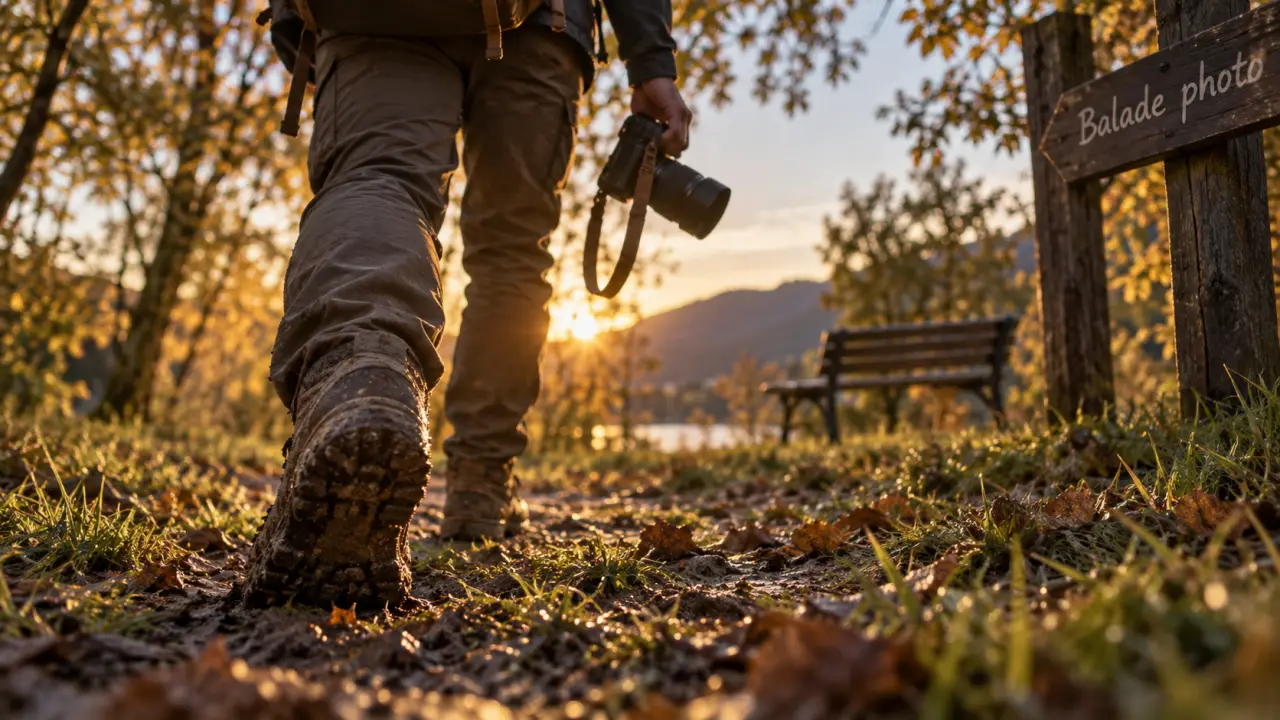
The best adult outdoor activities are not necessarily the most intense ones. A walk in a nearby park, a photography outing, a bike ride, or a beginner paddle session can improve your routine, help you meet people, and give you more time outside. The right choice depends on your fitness, budget, confidence, available time, and local surroundings.
Choose an activity by the feeling you want
Before buying equipment or booking a trip, decide what you want from your time outdoors. Some activities help you slow down and observe. Others raise your heart rate or create a shared challenge. Starting with the desired feeling makes the choice easier.
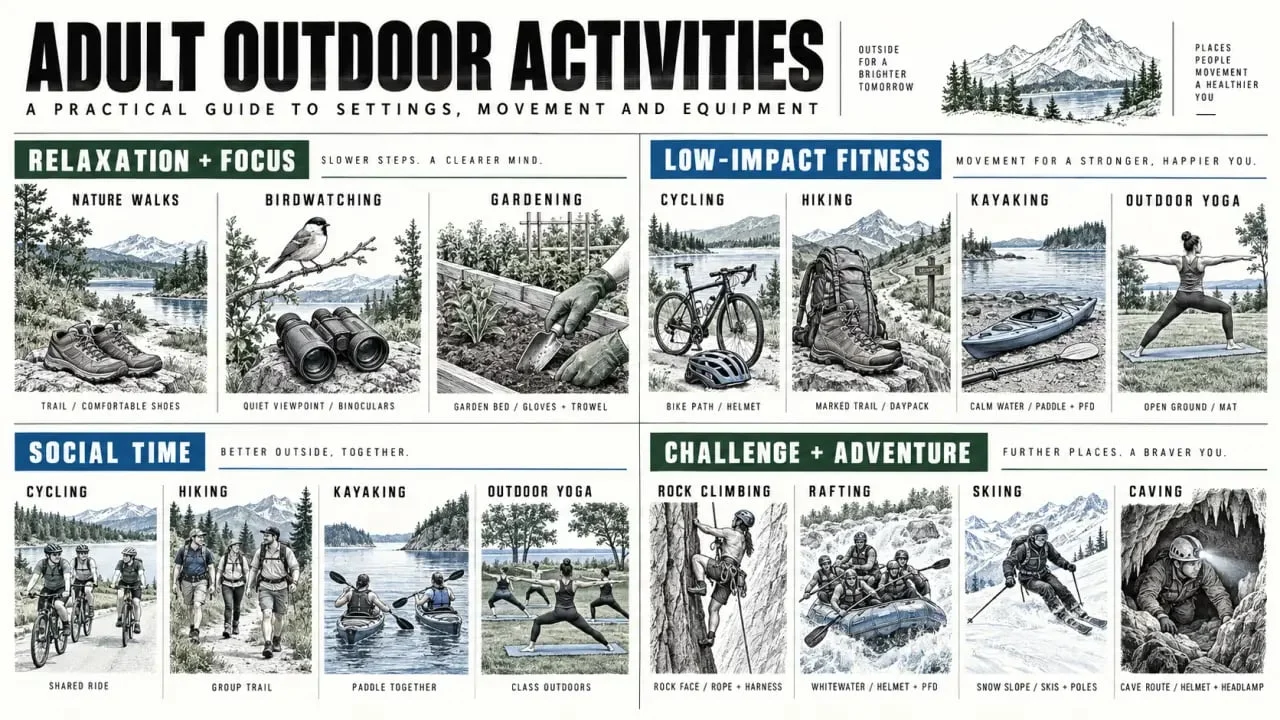
| Goal | Good activities to try | What you need | Best setting |
|---|---|---|---|
| Relaxation and focus | Nature walks, birdwatching, gardening, outdoor yoga, photography | Comfortable shoes; optional binoculars or phone camera | Parks, gardens, quiet trails, neighborhoods |
| Fitness with low impact | Cycling, hiking, swimming, paddleboarding | Activity-specific gear and water safety equipment where needed | Bike paths, trails, pools, calm lakes |
| Social time | Geocaching, lawn games, group walks, outdoor fitness classes, kayaking | Minimal gear or rental equipment | Local parks, recreation centers, waterways |
| Challenge and adventure | Rock climbing, mountain biking, rafting, skiing, caving | Specialized protective equipment and training | Managed outdoor sites and guided locations |
Easy outdoor activities that need little equipment
Turn an ordinary route into a nature walk
Walking is one of the most accessible outdoor activities for adults returning to movement after a long break. Pick a route with a purpose: notice birds, photograph interesting textures, visit a local landmark, or follow a geocaching clue using GPS. This adds curiosity without making the outing feel like a workout. Comfortable shoes, water, and weather-appropriate layers are usually enough.
Try observation-based hobbies
Birdwatching and photography are useful when you want fresh air without demanding physical effort. A phone camera can capture wildlife, macro details, landscapes, or street scenes. For birdwatching, binoculars and a field guide or identification app make it easier to recognize what you see. These hobbies work well alone, but joining a local group can provide advice and a social element.
Use gardening as practical outdoor movement
Gardening combines gentle exercise with a visible result. Carrying soil, weeding, watering, and planting all create movement at your own pace. A practical approach is to work selectively rather than trying to transform an entire garden in one afternoon. Choose one bed, one shrub, or a few containers, then stop before repetitive gripping or bending becomes tiring. This reduces strain and makes the activity easier to repeat.
Move up gradually with active outdoor options
When you are ready for more sustained effort, choose an activity with a clear beginner version. Progression matters more than speed, distance, or difficulty on your first outings.
- Cycling: A low-impact option for local errands, greenways, and longer weekend rides. Wear a helmet and start on separated paths or quiet routes.
- Hiking: Choose a marked trail that matches your time and fitness. Good-quality boots and, if useful, a trekking pole can improve comfort on uneven ground.
- Kayaking or canoeing: Calm water is a sensible first environment. Rental providers and introductory courses can supply a kayak, paddle, buoyancy aid, and basic instruction.
- Stand-up paddleboarding: It develops balance and can be peaceful on sheltered water. Wear a safety vest and only go out if you are confident in the water.
- Outdoor fitness classes: These offer structure, motivation, and an instructor who can suggest easier variations for different abilities.
For water activities, conditions matter as much as fitness. Wind, current, temperature, boat traffic, and your swimming ability can change a simple plan into an unsuitable one. Check local guidance before leaving shore.
Save technical and high-adrenaline activities for guided starts
Adventure does not require unnecessary risks. Rock climbing, whitewater rafting, scuba diving, caving, surfing, paragliding, and aerial activities are rewarding because they require skills, judgment, and suitable conditions. They are not good activities to learn through trial and error alone.
Know when instruction is essential
Book a qualified instructor or trained guide for your first experience with technical terrain, moving water, height, caves, or underwater environments. Rock climbing uses ropes, harnesses, belay devices, climbing shoes, helmets, and chalk. Caving may involve ropes, headlamps, kneepads, gloves, and advanced skills. Scuba diving requires training and certification from qualified instructors. A guide also helps you understand site rules, weather decisions, and emergency procedures.
Whitewater rafting is classified from level one to level six, so the river grade must match the group’s experience. Do not assume that a rafting trip, mountain-bike trail, or zip line is beginner-friendly simply because it is commercially available. Ask about the required fitness, minimum skills, safety briefing, and what happens if conditions change.
Plan a first outing that you will want to repeat
A successful first session is usually short, local, and easy to adjust. Parks, trails, beaches, recreation centers, and waterways often offer more options than people expect. Look for equipment rental, guided introductory sessions, outdoor clubs, walking tours, or seasonal programs before investing in specialist gear.
- Choose one activity and a realistic time slot, even if it is only 30 minutes.
- Check the weather, route, opening times, public-land rules, and any permit or reservation requirement.
- Bring water, a charged phone, sun or rain protection, and the relevant safety equipment.
- Tell someone where you are going when heading onto a remote trail or waterway.
- Leave room for recovery: stop while you still feel capable, then increase distance or difficulty gradually.
Respecting the place is part of outdoor recreation. Stay on designated paths, take litter home, avoid disturbing wildlife, and follow local restrictions. Whether you choose a quiet photography walk or a guided adventure, regular practice builds confidence more reliably than one extreme experience.
{“@type”:”Article”,”@context”:”https://schema.org”,”headline”:”Adult Outdoor Activities: Start Small, Then Build Toward Adventure”,”inLanguage”:”en-US”,”description”:”The best adult outdoor activities are not necessarily the most intense ones. A walk in a nearby park, a photography outing, a bike ride, or a beginner paddle session can improve…”}
Adapt the idea to your family and space
A family garden works best when it fits the people who will actually use it. Before copying an idea, think about the available space, daily maintenance, shade, safety, storage and how children or guests move through the area. A simple layout that is easy to water, clean and enjoy often beats a more ambitious project that becomes difficult to maintain.
Start with one practical improvement, then build from there. Raised beds, seating, shade, tool storage and child-friendly projects can all work together when each choice supports the next one. The goal is not a perfect garden in one weekend, but an outdoor space that becomes more useful every season.
Related guides to continue
To build a stronger understanding of this topic, continue with these related guides from the same site. They cover nearby decisions, maintenance points and practical details that often influence the final result.