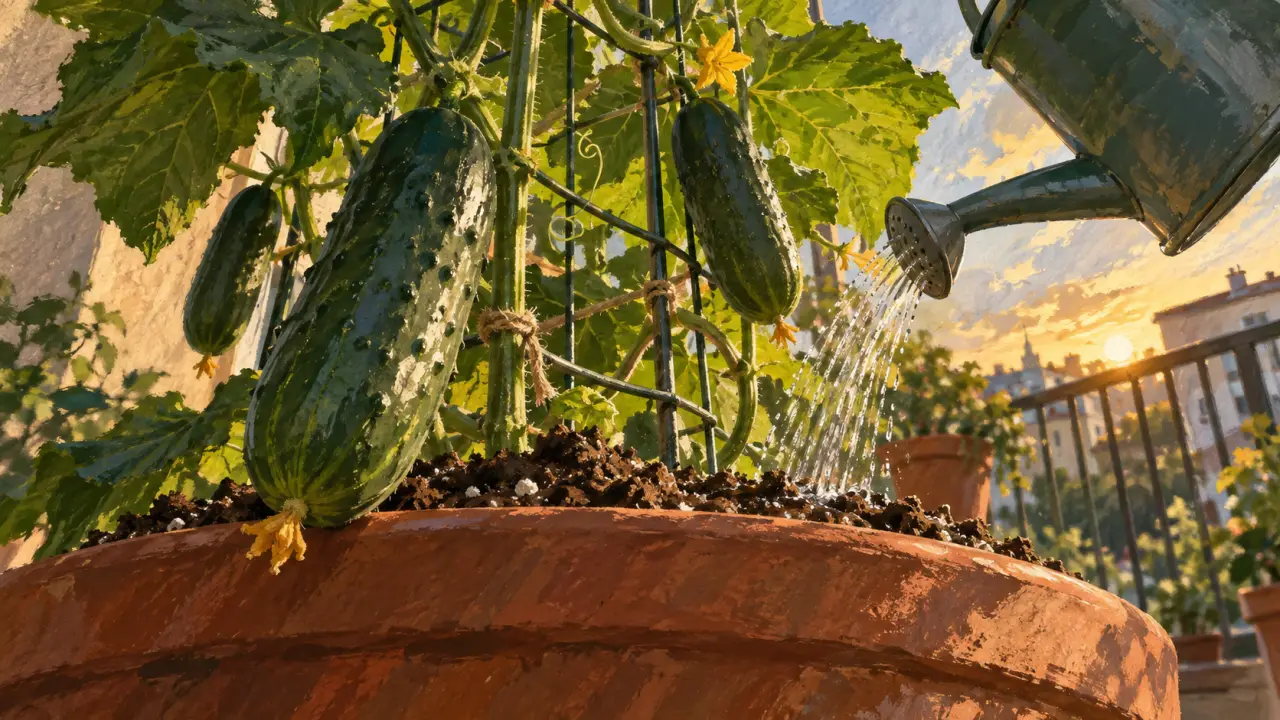
Planting cucumbers in pots lets you grow crisp fruit on a patio, balcony, or small yard. Containers give roots less space and dry out faster than garden beds, so success depends on the right pot, a moisture-retentive mix, regular watering, and steady feeding from planting to harvest.
Start with the right pot, plant, and growing mix
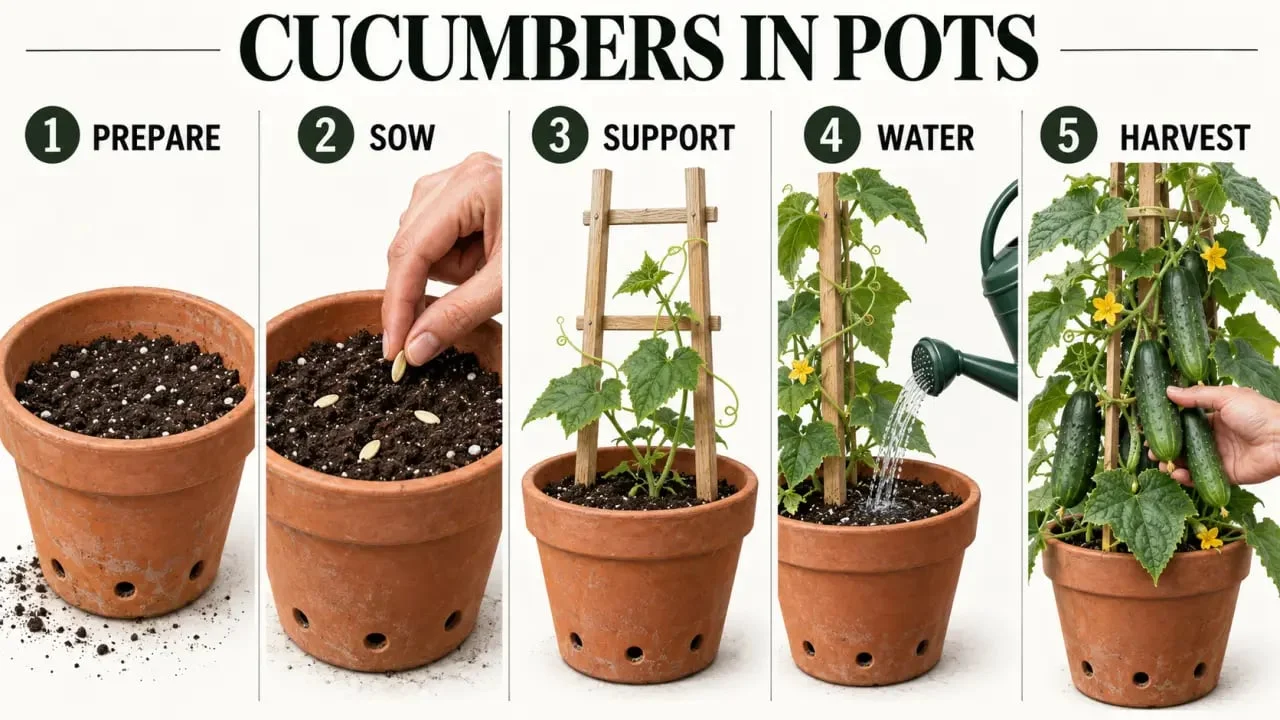
Cucumbers can grow well in containers, but they need more room than a small decorative pot provides. Choose a container with drainage holes that holds at least 5 gallons of potting mix for one plant. A 7–10 gallon grow bag or a larger planter gives vigorous vining varieties more moisture, nutrients, and root space.
| Choice | Best for | What it needs |
|---|---|---|
| Bush cucumber | Small patios and compact planters | One plant per 5-gallon pot; little or no support |
| Vining cucumber | High production in limited floor space | 7–10 gallon pot and a sturdy trellis |
| Parthenocarpic cucumber | Balconies or covered spaces with few pollinators | A container and support suited to its growth habit |
Parthenocarpic varieties can form fruit without pollination, which helps where bees rarely visit. Bush types stay compact, while vining plants climb and can produce well when trained upward. A bush variety is not automatically the best choice for a small space: a supported vine may take up less horizontal room than a sprawling bush plant.
Build a mix that drains without drying out overnight
Use a lightweight, quality potting mix instead of dense garden soil. Garden soil compacts in containers, slows drainage, and reduces the air available to roots. Mix in compost for organic matter and fertility. Coco coir or peat moss helps the mix retain moisture; around one third of the mix can be useful in hot, exposed conditions. Add a slow-release vegetable fertilizer at planting and follow the product label.
Container walls expose the root zone to sun, wind, and rapid temperature changes. A pale container, a shaded outer pot, or a layer of mulch on the mix can reduce overheating. This helps watering remain effective because the roots are less likely to dry out and heat up repeatedly.
Plant in warm weather with seeds or young plants
Cucumbers are warm-season plants. Set pots outside after the risk of frost has passed and the weather is reliably warm. Place them in strong direct light. At least 6 hours is a workable minimum, while 8 hours supports stronger growth and fruiting.
Direct sowing versus transplanting
Direct sowing is simple and avoids disturbing cucumber roots. Plant three seeds about one half to one inch deep, then keep the strongest seedling after germination. For an earlier start, grow or buy a young transplant. Seedlings can begin indoors 3–4 weeks before outdoor planting, but move them carefully because cucumbers do not tolerate a broken root ball well.
Plant one cucumber per 5-gallon container. In a larger trough, leave 12–18 inches between plants. Avoid overcrowding. Dense foliage traps humidity, competes for water, and makes it harder to spot pests.
Make watering, feeding, and support one routine
Container cucumbers need an evenly moist mix, not permanently saturated soil. Check the surface daily in warm weather and water slowly at the base when the upper layer feels dry. In summer heat, a small pot may need water twice a day; an established plant often needs daily watering. Sun, wind, pot size, and rainfall all affect the schedule, so let the mix guide you rather than following the calendar.
- Water early in the day so leaves dry quickly.
- Mulch the surface to slow evaporation.
- Empty saucers after watering because standing water encourages root rot.
- Use a self-watering planter or drip line if regular watering is difficult.
Frequent watering gradually washes nutrients from potting mix. Supplement the slow-release fertilizer with a liquid feed every 2–4 weeks during active growth, following the product instructions. A balanced fertilizer such as 7-7-7 or 10-10-10 can work. Avoid excess nitrogen, which may produce abundant leaves with fewer fruits.
Give vining plants support from day one
Install a trellis, netting, strings, or a sturdy tomato cage when you plant. Adding support later can damage roots. Vertical growth improves air circulation, keeps fruit cleaner, and makes harvesting easier. Anchor the support firmly to the container or wall, especially on a windy balcony. Guide young vines onto it gently instead of tying stems tightly.
Prevent common container cucumber problems early
Regular checks are more useful than waiting for a serious infestation. Look under leaves for aphids, whiteflies, cucumber beetles, squash bugs, and slugs. Remove visible pests by hand where practical, and use non-toxic sticky traps for whiteflies. Keep foliage spaced and avoid wetting leaves frequently to reduce the risk of powdery mildew.
| Symptom | Likely cause | First correction |
|---|---|---|
| Bitter fruit | Water stress or heat stress | Water consistently and mulch the pot |
| Yellow, wilting plant | Overwatering, poor drainage, or root trouble | Check drainage holes and let excess water drain |
| Few fruits | Low light, limited pollination, or nutrient imbalance | Increase light and review the variety and feeding routine |
| White powder on leaves | Powdery mildew | Improve airflow and remove badly affected leaves |
Consistent moisture matters especially during hot weather. Water stress can contribute to bitter cucumbers, while poor drainage leaves roots in excess water and increases the risk of root problems. If production is low, check light exposure, pollination conditions, and the plant’s nutrient supply before changing several factors at once.
Harvest cucumbers while they are young and firm
Most cucumbers produce a crop in 50–70 days. Flowers commonly appear after 35–55 days, and fruit can develop 10–12 days after a fertilized flower. Pickling cucumbers are often harvested at 2–6 inches, while slicing types are commonly picked at 6–8 inches. Your seed packet remains the best guide for the intended variety.
Harvest frequently, before fruits become oversized, dull, or seedy. Cut each cucumber with clean snips or pruners, leaving about one quarter inch of stem instead of pulling it from the vine. Regular picking encourages continued flowering, while overripe fruit can slow further production. With enough space, steady moisture, and regular care, even one plant in a 5-gallon pot can provide a useful harvest.
{“@type”:”Article”,”@context”:”https://schema.org”,”headline”:”Grow Cucumbers in Pots Successfully: Use 5 Gallons, One Plant, and Consistent Moisture”,”inLanguage”:”en-US”,”description”:”Planting cucumbers in pots lets you grow crisp fruit on a patio, balcony, or small yard. Containers give roots less space and dry out faster than garden beds, so success depends…”}
Related guides to continue
To build a stronger understanding of this topic, continue with these related guides from the same site. They cover nearby decisions, maintenance points and practical details that often influence the final result.