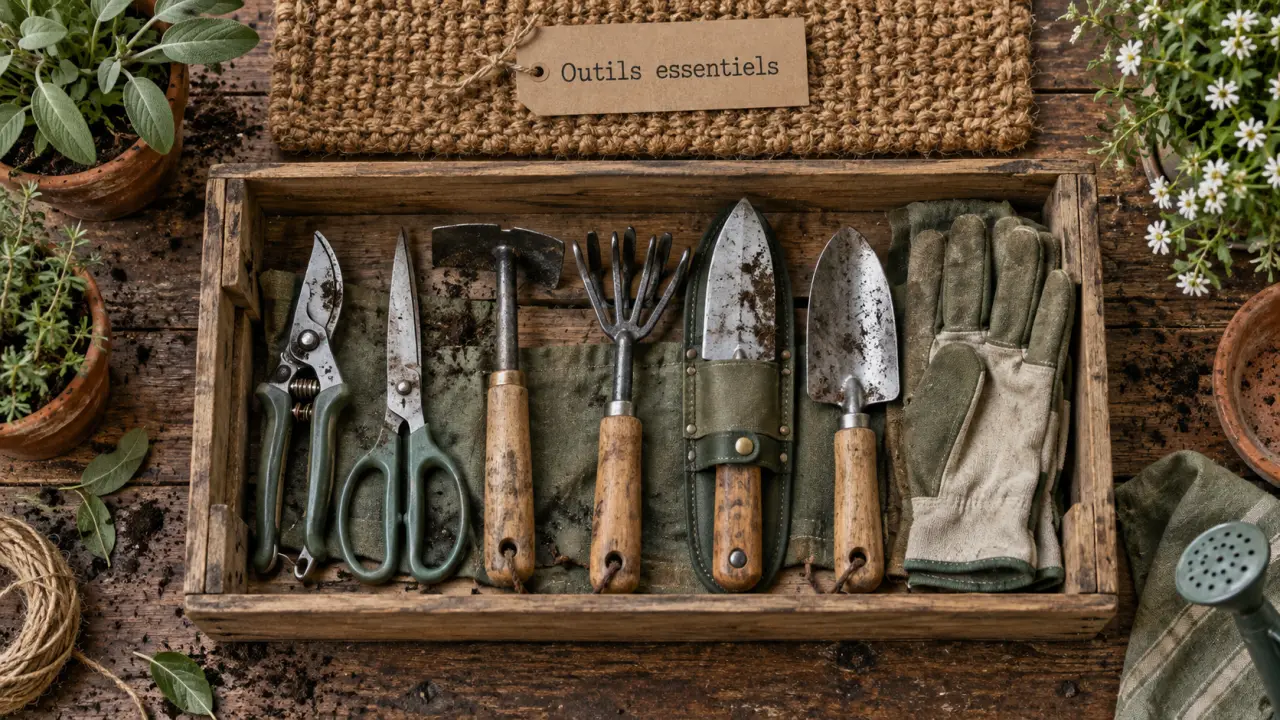
The best garden tools are not necessarily the largest or most expensive. A compact kit built around the jobs you do most often, such as cutting, weeding, planting, and moving soil, makes routine work quicker and less tiring. Start with durable hand tools, then add long-handled options where they genuinely reduce bending or effort.
Choose tools by the job, not by the size of the set
A large boxed set may look appealing, but it often includes several tools that perform the same task poorly. A better approach is to identify the work your garden requires regularly. Containers and raised beds need precise, lightweight tools, while lawn borders, vegetable plots, and shrub-filled gardens benefit from stronger digging and pruning equipment.
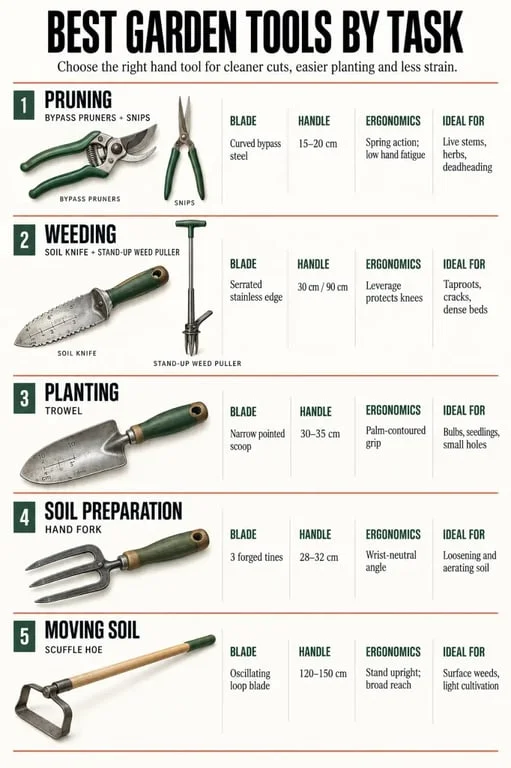
| Garden task | Best tool type | What to look for |
|---|---|---|
| Pruning stems and shrubs | Bypass pruners | Sharp passing blades, comfortable grip, secure lock |
| Removing young weeds | Scuffle hoe | Blade that cuts on push and pull, long handle |
| Pulling deep-rooted weeds | Hand weeder or stand-up weed puller | Narrow tip, firm leverage, low bending |
| Planting and dividing | Trowel or soil knife | Stainless steel blade, strong tang, depth markings |
| Preparing small areas of soil | Hand fork or cultivator | Rigid tines and a handle that will not twist |
For most home gardeners, seven essentials cover everyday work: bypass pruners, snips, a trowel, a hand fork, a soil knife, a hoe or weeder, and a pair of gloves. This approach lets you choose each item for its real purpose instead of settling for a one-size-fits-all collection.
The tools that earn a permanent place in your shed
Bypass pruners and snips for clean cuts
Bypass pruners use a passing blade action, similar to scissors. They are a reliable all-round choice for live stems, flowers, and small branches because they make a cleaner cut than crushing-style tools. Choose a model that opens comfortably in your hand and has an easy-to-reach lock. The locking mechanism should secure the blades for storage without interrupting your grip.
Fine snips are useful if you regularly deadhead flowers, harvest herbs, or trim delicate stems. They offer more precision than bulky pruners and are easier to control in crowded growth. If you only carry one cutting tool, choose bypass pruners. Add snips when fine, frequent trimming is part of your routine.
A soil knife that replaces several hand tools
A Hori Hori-style soil knife is one of the most versatile garden tools for small spaces and mixed borders. Its blade can dig a planting hole, cut roots, divide perennials, scrape weeds from cracks, and measure planting depth. A 6-inch stainless steel blade is a practical format for close work without carrying a trowel, saw, and weeder separately.
Use a sheath whenever you carry the knife around the garden. It protects the edge and prevents the blade from disappearing under foliage. The soil knife is especially useful when several small jobs need to be done in one area, since you can switch from digging to cutting or weeding without returning to the shed.
A hoe matched to your weeding style
A scuffle hoe works well on small, surface-rooted weeds in open soil. Its blade slices just below the surface on both the push and pull stroke, allowing you to cover a bed without repeatedly crouching. Use it before weeds become large and deeply established, when shallow cutting is most effective.
For tap-rooted weeds growing among established plants, use a narrow hand weeder instead. It lets you work beside stems and aim for the root system rather than disturbing the whole bed. A stand-up weed puller is another practical option when bending or kneeling is uncomfortable. Choose between these tools according to the weed type, plant spacing, and amount of ground you need to cover.
Comfort features that make garden tools worth buying
Ergonomics matters when gardening involves repeated gripping, twisting, and lifting. The right handle shape helps you maintain a neutral wrist position, while a well-balanced tool reduces the force needed to control it. This is particularly helpful for gardeners with arthritis, reduced hand strength, or recurring wrist pain.
- Choose a comfortable grip: the handle should fill your hand without forcing your fingers too far apart.
- Check the weight: a heavy tool may feel robust in a shop but become tiring during an hour of weeding.
- Use long handles for repetitive ground work: they reduce bending during hoeing and weed removal.
- Pick visible handles: bright colours are easier to spot in mulch, grass, and compost.
- Test the lock: on pruners, it should secure the blades for storage without pinching your fingers or disrupting your grip.
Hand size also affects comfort. A handle that feels secure without requiring a tight grip can reduce hand fatigue during repeated work. If you have limited strength, prioritize balance, a manageable weight, and tools that let you work from a standing position. A long-handled weeder or hoe may be more useful than adding another small hand tool.
Storage affects comfort and efficiency too. Keep the two or three tools used together in one predictable place, such as pruners and their sheath by the door, a trowel and hand fork in a bucket, and gloves clipped nearby. When each item has a fixed home, you avoid leaving sharp tools in beds, reduce unnecessary walks to the shed, and are more likely to put tools away clean and dry.
Durability matters more than a low purchase price
Good garden tools should be maintainable rather than disposable. Stainless steel resists rust well, but every blade benefits from being wiped after use, especially after working in wet soil. Carbon steel can be very strong, though it needs more careful drying and occasional oiling. The connection between the blade and handle is just as important as the blade material, so check that it feels solid and does not twist under pressure.
Before buying, check whether parts can be sharpened, replaced, or repaired. Replaceable blades, springs, and handles can extend the life of a favourite tool and offer better long-term value than replacing an entire item after one component fails. For pruners, replacement springs and blades are particularly useful because these parts experience repeated pressure during regular cutting.
Sharp tools are also easier to use. A clean pruning cut requires less force than a tool with a dull blade, while a properly maintained weeder works more predictably in the soil. Maintenance does not need to be complicated: wipe tools after use, dry them before storage, and follow the care requirements for the metal they use.
Build the right kit for your garden and your body
Beginners with containers or a small patio can start with pruners, a trowel, a soil knife, and gloves. Add a hand fork if you loosen soil frequently. For larger beds, a long-handled hoe and a stand-up weed puller may be more valuable than extra hand tools because they limit kneeling and bending.
A garden kneeler can make close planting and weeding more comfortable, while sturdy boots help when soil is muddy or uneven. Gloves provide a basic barrier during handling and weeding, especially when the ground is wet. These accessories do not replace the core tools, but they can make regular work easier to manage.
Build your collection gradually, based on the jobs that recur each week. A few sharp, comfortable, and repairable tools will serve you better than a crowded shed full of awkward alternatives. The best garden tools are the ones that suit your tasks, your space, and the way your body works.
{“@type”:”Article”,”@context”:”https://schema.org”,”headline”:”The Best Garden Tools Are Task-Specific, Comfortable, and Repairable”,”inLanguage”:”en-US”,”description”:”The best garden tools are not necessarily the largest or most expensive. A compact kit built around the jobs you do most often, such as cutting, weeding, planting, and moving…”}
Related guides to continue
To build a stronger understanding of this topic, continue with these related guides from the same site. They cover nearby decisions, maintenance points and practical details that often influence the final result.