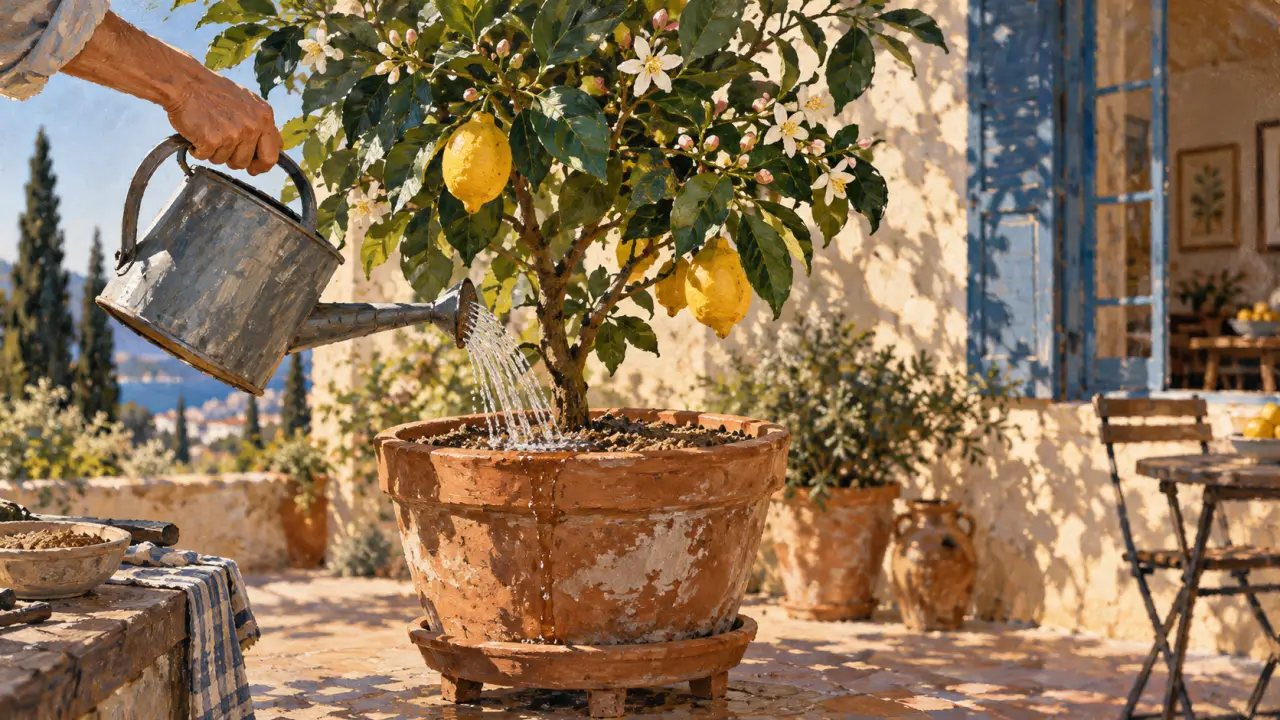
Successful lemon tree care depends on consistency, not constant attention. Your tree needs strong direct light, well-draining roots, regular feeding during active growth, and a stable environment. These conditions matter even more for potted trees, which dry out, cool down, or become waterlogged faster than trees planted in the ground.
Build the right conditions before problems start
Place your lemon tree where it receives at least 6 hours of direct sunlight daily. Six to eight hours is even better for flowering and fruiting. A sunny patio, balcony, or bright south-facing window usually works well. Indoors, rotate the pot occasionally so growth stays balanced. Keep the tree away from radiators and cold drafts.
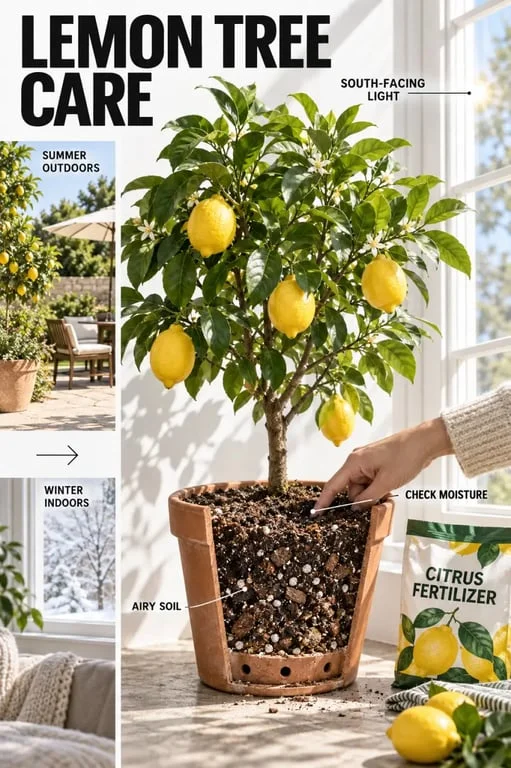
Use a citrus or cactus potting mix amended with perlite to create an airy, well-draining medium. The container must have drainage holes, and it should sit slightly above its saucer so the base never remains in collected water. Lemon trees do not tolerate “wet feet”: saturated roots lose access to oxygen and can rot.
Choose the variety for your space
A Meyer lemon is often a practical choice for container growing. It is generally more compact and more tolerant of slightly cooler conditions than a true lemon, which makes it suitable for patios and bright indoor spaces. True lemon varieties can also perform well, but they need equally bright conditions and offer less margin for cold or poor light. For a small home, look for a tree grown on dwarfing rootstock.
The canopy gives you useful clues about the tree’s growing conditions. Leaf colour, new shoots, flowers, and fruit each reveal part of the picture. Dark green leaves with steady new growth suggest that light, water, and feeding are reasonably balanced. Pale foliage, thin growth, or buds that fall early mean you should check these conditions together rather than treating one symptom in isolation.
Water according to the soil, not the calendar
There is no universal weekly schedule for a potted lemon tree. A plant in summer sun may need water much more often than one resting indoors during winter. Check the pot before watering. Wait until the top two inches of soil are dry, then water thoroughly until excess runs from the drainage holes. Empty the saucer afterwards.
- Soil still damp and pot heavy: wait before watering.
- Soil dry, pot light, leaves slightly soft: water deeply and evenly.
- Soil constantly wet with yellowing leaves: reduce watering and inspect the drainage.
- Very dry soil pulling away from the pot edge: water slowly in stages so the root ball can rehydrate.
Overwatering is often more damaging than allowing the surface to dry briefly. However, do not let the root ball become completely dry again and again, particularly while the tree is flowering or setting fruit. Repeated swings between drought and saturation commonly cause leaf drop or fruit drop.
Feed, prune, and repot at the right time
Lemon trees need regular nutrition while they are producing leaves, flowers, and fruit. Feed monthly in spring and summer with a citrus-specific fertiliser or a balanced fertiliser containing micronutrients. These trace elements matter because citrus can develop yellow leaves when nutrition is incomplete, even when the plant receives enough light.
Slow growth in winter is normal, especially indoors. Reduce or pause feeding when the tree is not actively growing, since fertiliser cannot compensate for weak winter light. Resume feeding when new growth begins.
Keep pruning light and purposeful
Prune dead, damaged, crossing, or overcrowded branches instead of cutting the tree into shape aggressively. Removing a few congested shoots improves air circulation and lets light reach the inner canopy. Remove shoots emerging below a graft point too, as they can draw energy away from the fruiting variety. Avoid major pruning while the tree is carrying flowers or developing fruit.
Repot only when roots need room
Repot young trees when roots fill the container or begin circling densely at the base. Move the tree up only one pot size and use fresh, free-draining mix. A dramatically larger container stays wet around a small root ball for too long, increasing the risk of root rot.
Adjust care when seasons and temperatures change
Outdoor summer conditions usually provide the light and airflow lemon trees prefer. In cold climates, bring container plants indoors before night temperatures fall below about 10°C. Make the change gradually when possible. A sudden move from outdoor sun to a dim, centrally heated room can stress the tree and trigger leaf drop.
In winter, place the tree in its brightest location, water less often, and keep it away from heating vents. Dry indoor air can encourage spider mites, so inspect the undersides of leaves regularly. Do not panic if the tree pauses growth. The priority is to keep the roots healthy until brighter conditions return.
Read common symptoms before taking action
| Symptom | Likely cause | First action |
|---|---|---|
| Leaves dropping | Change in light, temperature, or watering | Stabilise conditions and check soil moisture before watering again. |
| Yellow leaves | Overwatering, weak feeding, or poor drainage | Check the roots and drainage, then review the feeding routine. |
| Flowers or tiny fruit falling | Stress from dry soil, low light, or a sudden move | Keep watering even and provide stronger direct light. |
| Sticky leaves or cottony clusters | Aphids, scale, or mealybugs | Isolate the tree and remove pests promptly with horticultural soap. |
| Fine webbing and speckled leaves | Spider mites, often in dry indoor air | Wash the foliage carefully, improve humidity around the plant, and monitor it closely. |
Most lemon tree problems are reversible when you catch them early. Inspect the leaves, soil, and drainage whenever you water. This simple routine helps you spot pests, prevent root problems, and respond to stress before a few yellow leaves turn into a declining tree.
{“@type”:”Article”,”@context”:”https://schema.org”,”headline”:”Lemon Tree Care: More Sun, Less Water, Fewer Dropped Leaves”,”inLanguage”:”en-US”,”description”:”Successful lemon tree care depends on consistency, not constant attention. Your tree needs strong direct light, well-draining roots, regular feeding during active growth, and a…”}
Adapt the idea to your family and space
A family garden works best when it fits the people who will actually use it. Before copying an idea, think about the available space, daily maintenance, shade, safety, storage and how children or guests move through the area. A simple layout that is easy to water, clean and enjoy often beats a more ambitious project that becomes difficult to maintain.
Start with one practical improvement, then build from there. Raised beds, seating, shade, tool storage and child-friendly projects can all work together when each choice supports the next one. The goal is not a perfect garden in one weekend, but an outdoor space that becomes more useful every season.
Related guides to continue
To build a stronger understanding of this topic, continue with these related guides from the same site. They cover nearby decisions, maintenance points and practical details that often influence the final result.